Why wastewater treatment is essential – and which equipment makes the difference in a modern plant

Water is one of the most important resources of any community and industry. But after use, it carries organic matter, suspended solids, nutrients, fats, salts and, in some industrial applications, even metals or other contaminants.
Wastewater comes from households, municipal networks and industrial processes, and in combined sewer systems it can also include stormwater. Without proper collection and treatment, these contaminants can reach rivers, lakes and soil, affecting ecosystems and the quality of water resources.
Wastewater treatment has evolved steadily with the development of environmental technologies and increasingly strict requirements for protecting water resources. Today, a modern wastewater treatment plant integrates several successive processes (mechanical, biological and, depending on the application, chemical or advanced) to reduce the pollutant load and bring the water to the parameters required for discharge or reuse.
What actually happens in a wastewater treatment plant?
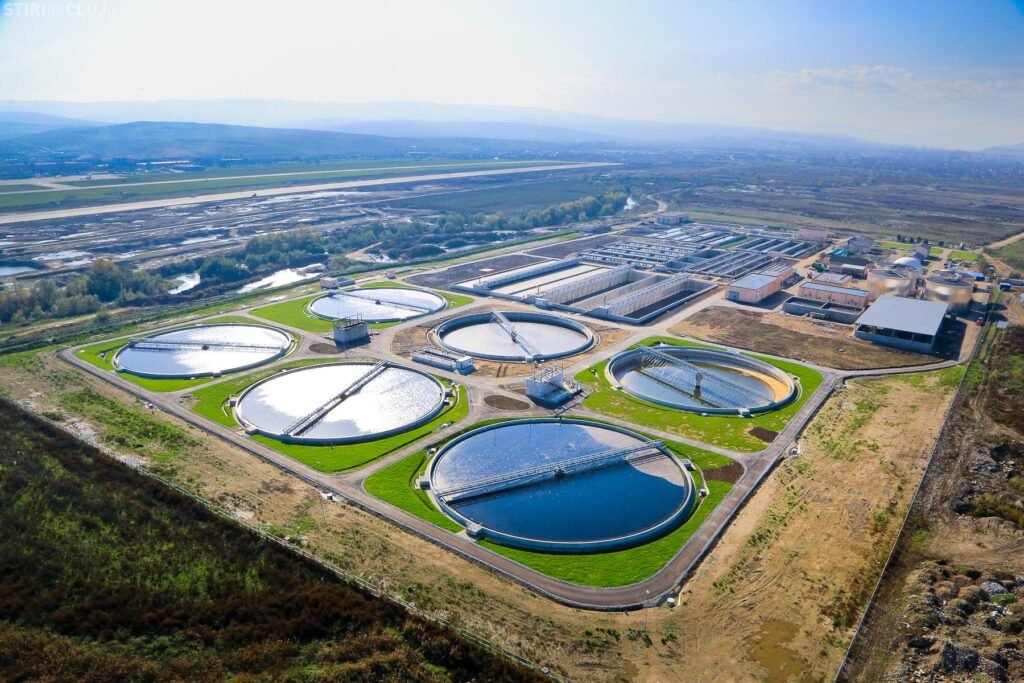
A modern plant does not work as a single “filter”. It is a system of several successive processes, each designed for a particular type of contaminant.
From a technical point of view, it is useful to see the plant as two main streams: the water line, in which the wastewater is progressively cleaned, and the sludge line, in which the solids separated from the water are thickened, stabilised and prepared for recovery or disposal.
Mechanical pretreatment
The first challenge is removing material that can block or damage downstream equipment.
Raw wastewater passes through screens and sieves that retain coarse material such as textiles, plastics and other solids. In the grit removal stage, sand and heavy mineral particles are separated, and grease and floating material can be removed in dedicated units.
The purpose of this stage is not only to improve water quality. Pretreatment protects pumps, pipes, agitators and biological process equipment against clogging, abrasion and premature wear.
Depending on the plant configuration, primary settling may follow, in which part of the settleable solids is separated before the water enters the biological process.
Biological treatment
After coarse material and easily separable solids are removed, the water still contains organic substances and nutrients that cannot be removed efficiently by mechanical means alone.
This is where the biological process comes in.
In activated sludge systems, microorganisms use organic matter as a substrate, converting a large part of the biodegradable pollutants. Aeration supplies the oxygen needed for the aerobic processes and at the same time helps keep the biomass in suspension.
If the plant is also designed for nitrogen removal, the process may include two key mechanisms: nitrification, which takes place under aerobic conditions, and denitrification, which takes place under anoxic conditions.
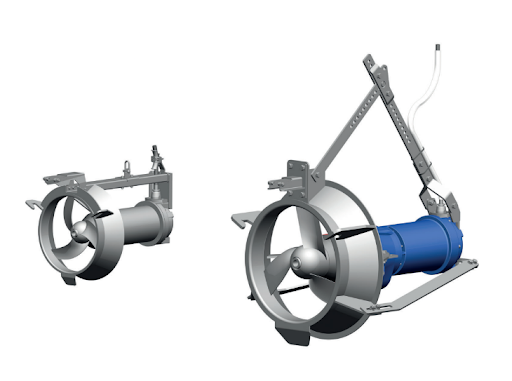
At this stage, microorganisms help reduce nitrogen compounds in the water, which can contribute to pollution and imbalance in aquatic ecosystems. The process requires zones with different operating conditions, and water and sludge are recirculated between them so that treatment proceeds efficiently. Amaline pumps can be used precisely for this type of recirculation in biological tanks.
Separating the water from the active biomass
After the biological process, the mixture of water and activated sludge flows into the secondary clarifiers.
Here, the biomass separates from the treated water by gravity. Part of the settled sludge is returned to the biological process to maintain the required concentration of microorganisms, and the surplus is withdrawn and transferred to the sludge treatment line. This is the principle of return activated sludge and surplus activated sludge.
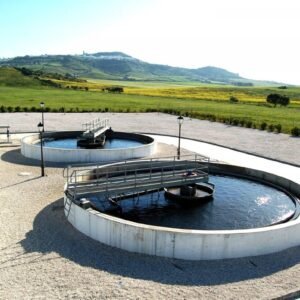
The clarified water can be discharged if it meets the effluent requirements, or it can continue to further treatment stages
Advanced treatment
Not all plants stop after biological treatment.
Depending on the sensitivity of the receiving water, environmental requirements and the intended use of the water, additional processes may be added for phosphorus removal, filtration of fine solids, reduction of other contaminants or disinfection of the effluent.
This is why the term “treated water” should not automatically be taken to mean “drinking water”. The quality achieved depends on the installed technology and on the requirements for discharge or reuse.
The sludge line. What happens to the solids removed from the water?
Wastewater treatment inevitably produces sludge.
It can come from primary settling, where this stage exists, and from the surplus biomass generated by the biological process. Grease separators and other processes can also generate residual streams that must be managed.
Depending on the plant configuration, sludge can undergo thickening, stabilisation or digestion, dewatering and other treatment processes. Anaerobic digestion can help stabilise the organic matter and, in plants designed for this purpose, produce biogas.
The aim is to reduce volume, stabilise the material and obtain a residue that can be managed under controlled conditions. The final destination (agricultural use, energy recovery, incineration or another disposal route) depends on the characteristics of the sludge and the applicable requirements.
The right equipment makes the difference between a process that works and one that is efficient
In a wastewater treatment plant, pumps and mixers are not just auxiliary equipment. They keep flows moving, recirculate biomass, prevent unwanted sedimentation and transfer water and sludge between the different process zones.
KSB offers a range of equipment dedicated to wastewater applications, from submersible mixers and recirculation pumps to pumps for raw wastewater, sludge and dry-installed systems.
AmaProp – efficient mixing in biological and sludge tanks
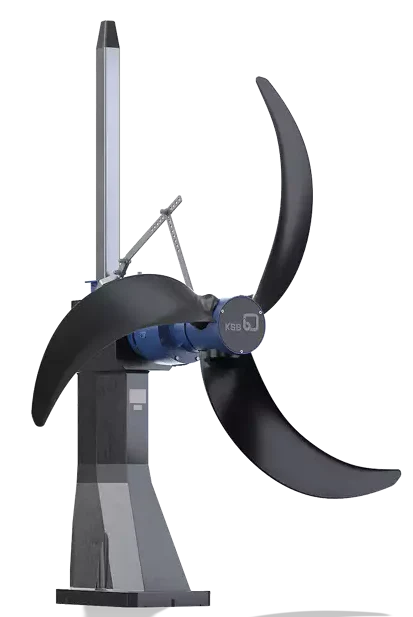
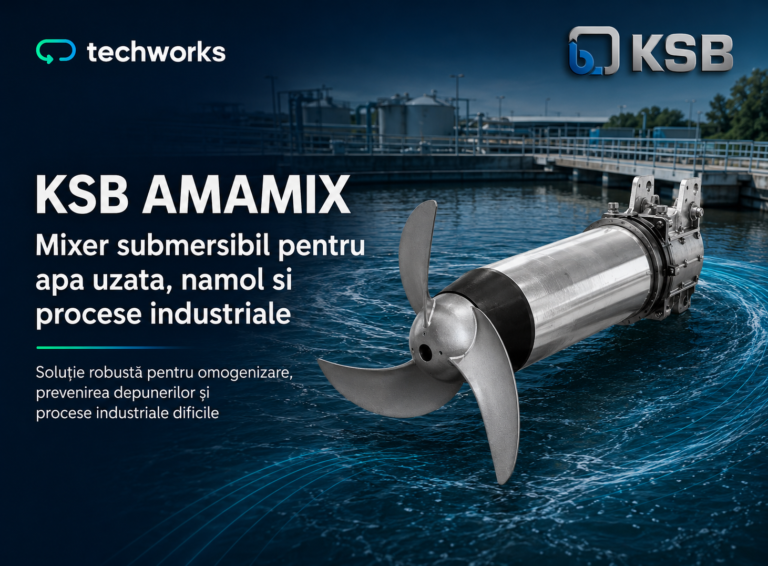
AmaProp is a horizontal submersible mixer with a self-cleaning ECB propeller and a coaxial gearbox. Versions for use in potentially explosive atmospheres are also available.
It is intended for environmental applications and can be used for circulation, keeping solids in suspension and generating flow in nitrification and denitrification tanks, activated sludge tanks and sludge storage tanks.
Process advantage: maintaining proper circulation limits unwanted sedimentation and helps homogenise the tank. The self-cleaning ECB propeller is designed for reliable operation in wastewater and sludge applications.
Amaline – recirculation at high flow rates and low heads
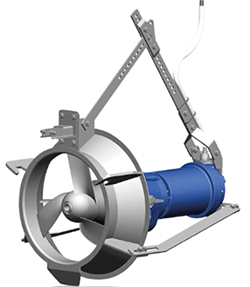
Amaline is a horizontal propeller pump with submersible motor, for wet installation. It can be direct-driven or gear-driven and uses an ECB propeller with rigid blades designed to shed fibres. The connection to the discharge pipe is boltless, and the range also includes explosion-proof versions.
One of the main applications indicated by KSB is recirculation of activated sludge from the nitrification zone to the denitrification zone. The pump is suitable where large volumes of fluid must be moved at low heads.
Process advantage: correctly sized recirculation contributes directly to the stability of the biological process and to efficient nitrogen removal.
Amarex KRT – a versatile solution for wastewater and sludge
Amarex KRT is a single-stage submersible pump designed for pumping wastewater and sludge, available in several installation configurations and with different hydraulic variants, depending on the application requirements.
An important advantage is the power cable connection system, designed for reliable sealing and simple connection to the motor. The connector is asymmetrical, which reduces the risk of incorrect connection, including in the versions for potentially explosive atmospheres.
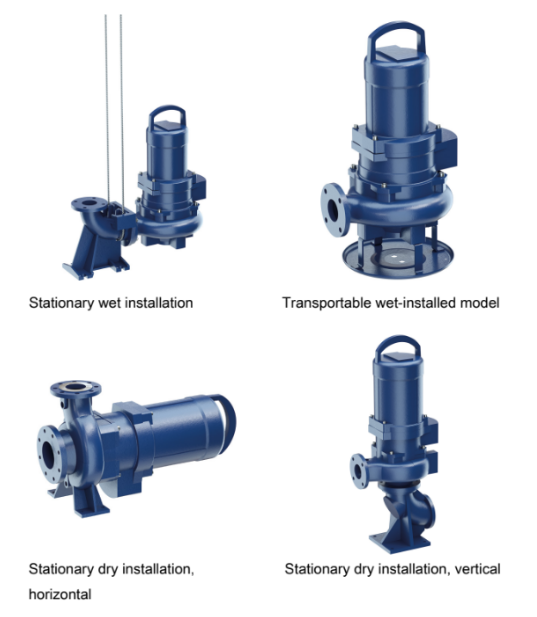
Maintenance is also simplified: the cable can be removed and replaced in a quick procedure, without complex work on the motor. Additional protection is provided by embedding the cable and conductors in resin, contributing to a secure connection under difficult operating conditions.
For submersible installations, KSB also offers a guide wire system, which makes it easier to lower the pump into and lift it out of the tank. The system adapts to different installation depths, tolerates a deviation of up to ±5° from vertical and simplifies transport and installation.
Typical applications:
- pumping raw wastewater;
- transporting primary and secondary sludge;
- pumping stations and wastewater treatment plants;
- transferring fluids with solids and fibres.
Why it matters: In a wastewater treatment plant, fast access to equipment and short intervention times are as important as hydraulic performance. Amarex KRT combines the robustness required for wastewater applications with design solutions that simplify installation, cable replacement and maintenance.
Amarex – a compact pump for wastewater, recirculation and drainage
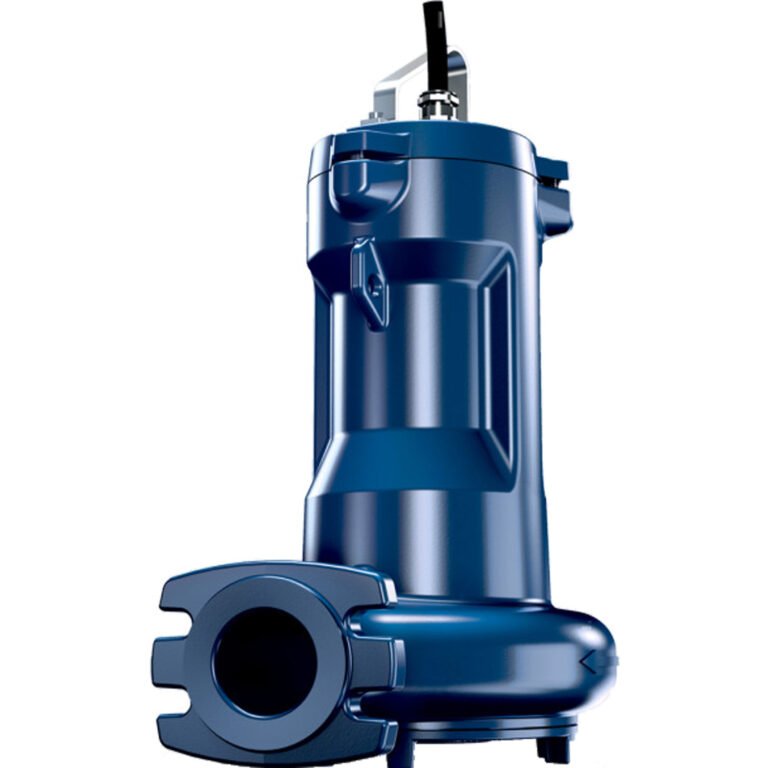
Amarex is a vertical, single-stage submersible pump for wet installation. It is available with an F-max vortex impeller or a D-max open two-vane impeller, in stationary or transportable version. The pump is close-coupled, single-entry and not self-priming; ATEX-compliant variants are also available.
KSB specifies its use for wastewater transport and management, drainage systems, wastewater treatment plants, stormwater, recirculation and sludge treatment.
Process advantage: the F-max and D-max hydraulic variants are developed for demanding wastewater applications, where resistance to clogging, reliability and efficiency are important factors.
Amacan K – high flow rates in a compact installation
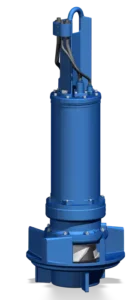
Amacan K is a submersible motor pump for installation in a discharge tube. It is a single-stage, single-entry pump with a channel impeller, also available in an ATEX-compliant version.
The concept is suitable for pumping stations, drainage, stormwater transport and water pollution control applications. The range can reach high flow rates, making it relevant for infrastructure where large volumes of water must be moved.
Process advantage: installation in a discharge tube allows the pump to be integrated directly into the hydraulic structure and is an attractive solution for applications where high pumping capacity and efficient use of space are priorities.
Sewatec – a dry-installed pump for easy maintenance access
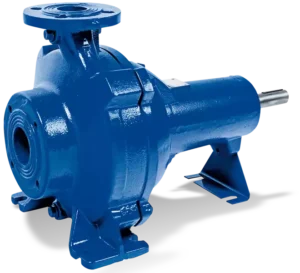
Sewatec is a volute casing pump for horizontal or vertical installation, available with different impeller types and with discharge flanges to DIN and ANSI standards. Explosion-proof versions are also available.
KSB recommends it for transporting and discharging wastewater, handling waste water streams, transporting contaminated surface water and sludge processing. Impellers with large free passages are designed to reduce the risk of clogging in wastewater applications.
Process advantage: dry installation gives access to the pump assembly without working in a submerged tank, which can simplify inspection and maintenance.
An efficient plant starts with the right equipment selection
In wastewater treatment there is no universal pump and no single solution that fits every plant.
Water composition, solids and fibre content, flow rate, head, operating mode, energy efficiency requirements and maintenance access must be analysed together.
That is why equipment selection should not be based solely on nominal flow rate. A correctly selected pump or mixer can mean fewer blockages, lower energy consumption, less frequent maintenance and better availability of the whole installation.
Techworks is the authorised KSB distributor in Romania and provides technical advice, equipment selection and support for pumping projects in water treatment, infrastructure and industry.
CONTACT US
Do you have a project for a municipal or industrial wastewater treatment plant? The Techworks team can help you choose the right KSB configuration for your application, from recirculation and mixing to pumping wastewater and sludge.